
Fall Harvest Overview

Harvesting Mason Bee cocoons in the fall

harvest mason bee cocoons mason bee harvesting


Why should you harvest your mason bees? We believe the path to success is to learn something, try something, observe what occurred, and then start back learning and trying again.  If you want your mason bee colony to succeed, you need to know what’s going inside the straws!  Hoping that “all is well” works for a short period.  Your mason bees will tend to either die or move to greener pastures in a few short years.

If you’re concerned about remembering to harvest, then sign up for our Bee-Mail which will remind you in the fall.

You should wait until late September before opening your nesting material.

Things you’ll need:

  • A large area that you might want to protect with newspaper. There will be dirt and pollen to deal with!
  • A sharp knife or razor blade (if opening tubes/inserts or cocoons)
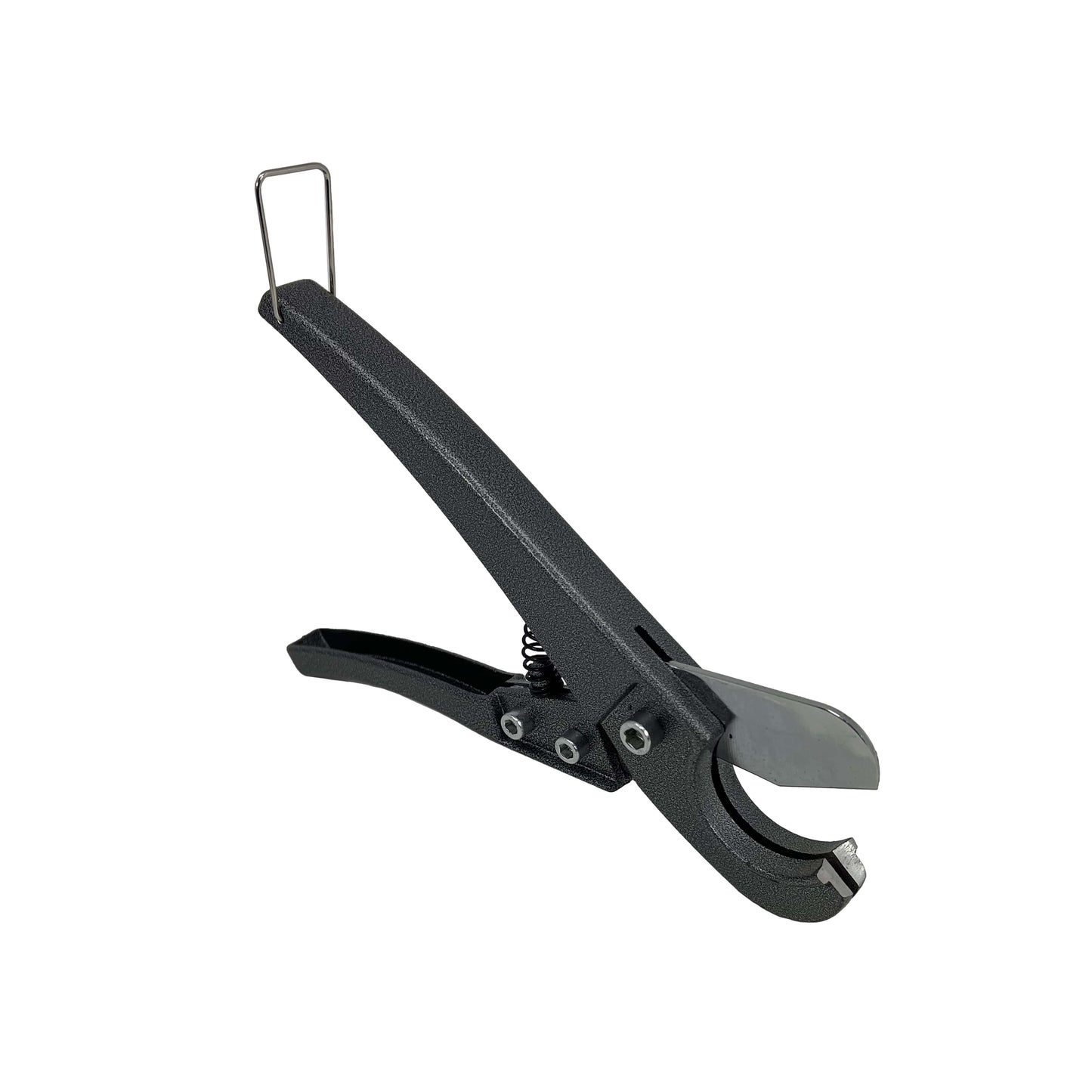
  • A butter knife (if opening reeds)
  • A small flat-bladed screwdriver & stiff brush (if opening wood trays)
  • A bowl or box for cocoons
  • A depth gauge (see the next section)
  • If you have a lot of straws (100+), you might want to use a colander or large screen to sieve out dirt.
  • A friend to teach a bit of nature to
  • Lastly, good music playing in the background…


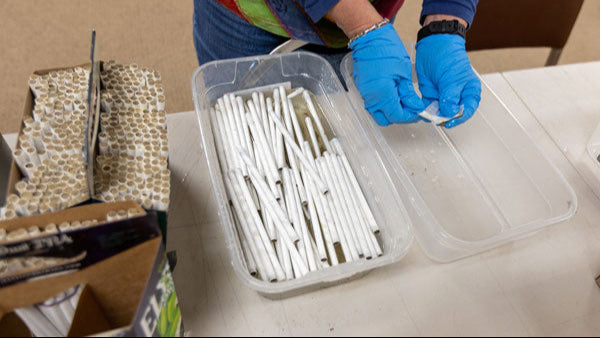
Separate the empties from the full and partially full straws

(You don’t want to open empty mason bee tubes!)

The first step is to sort out all of the full tubes and any partially full that you can see. For traditional mason bee tubes with solid backs, you’ll want to use a depth gage:

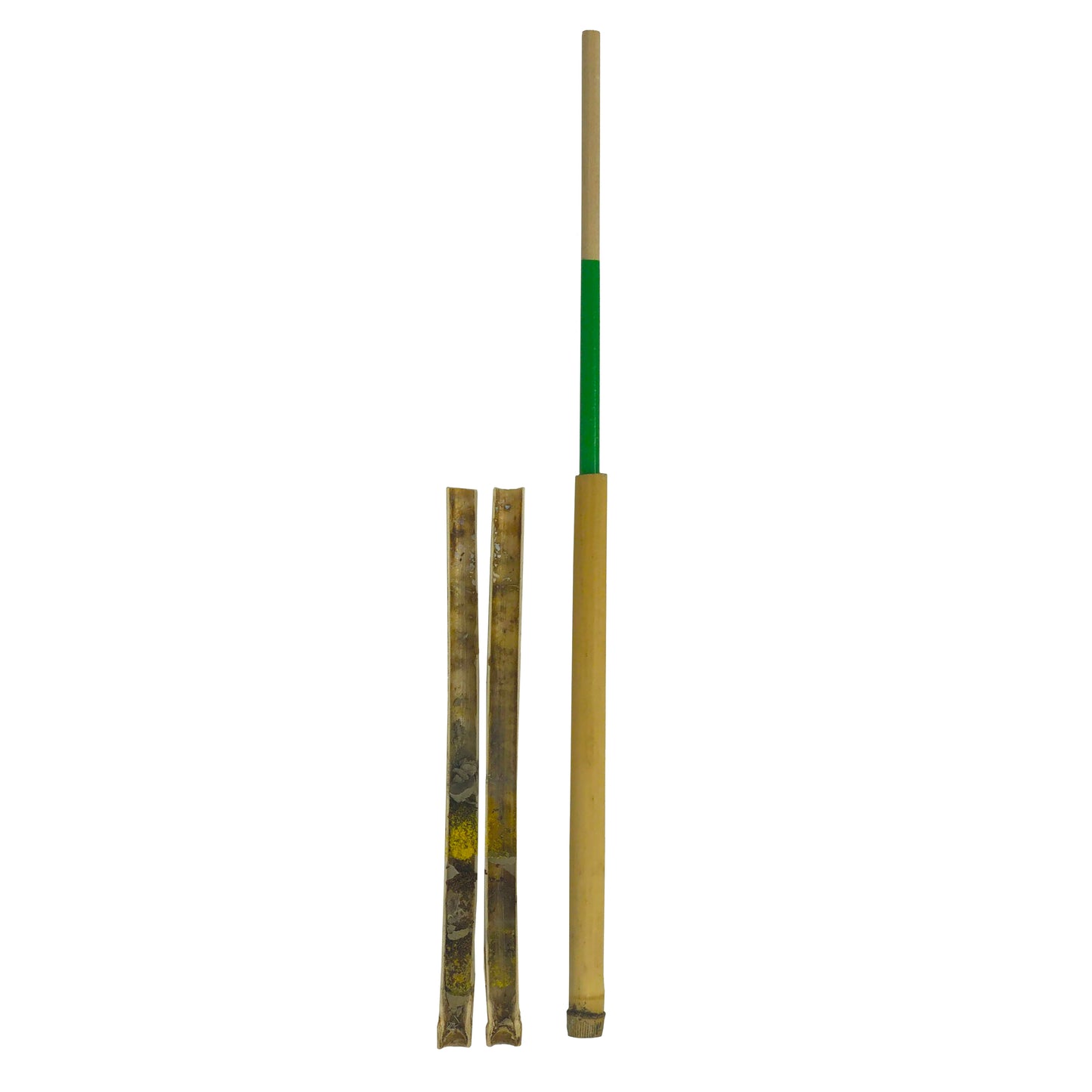
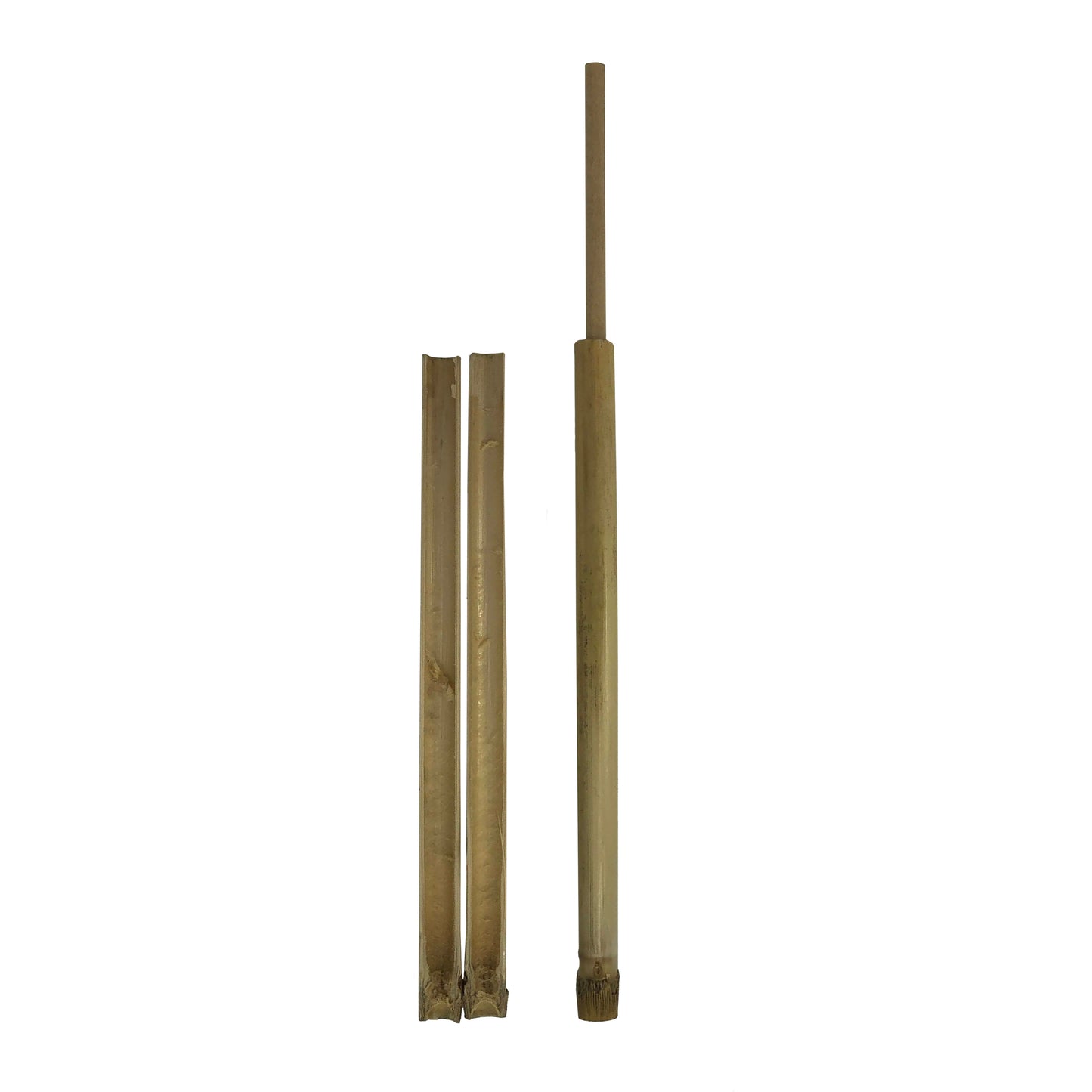
  • Use a long plastic straw or wood skewer to determine if a mason bee used the tube.
  • Insert the “depth gauge” into an empty tube and mark on the gauge where it meets the top of the empty tube.
  • Now use this gauge to measure the rest of your tubes.  If the mark on the gauge is higher than the tube, a mason bee has probably left at least one cocoon chamber in the tube!
 depth gage for mason bee harvest Depth gauge is marked for the tube length
 harvest gage for mason bees in straw This tube is empty…
 depth gage showing mason bees in tube There’s something in this tube!  Maybe two cocoons…

For easytear straws, it’s quite simple to just look through them to see which are empty.  (If you see light through the end, a mason bee hasn’t used the straw and this straw can be set aside.) hole in the back of easytear mason bee tubes

Here’s a short video that shows you how to do this…

Look at the outside of the mason bee tubes for anything suspicious

Are there holes in the mud plugs?

 suspicious hole in mason bee tube crown bee "bee mail"
Are there holes on the sides of the straws?

mono exit holes in mason bee tube
If the answer is yes for either of the above, separate these suspicious straws from the healthy straws.

Now, separate about 15-20% of your straws from the rest.  These will be used to test the healthiness of your colony.

Open up the nesting material

EasyTear mason bee tubes:

  1. These should open quite easily.  Begin tearing at the entrance with your fingers.  You might need to use a sharp knife or razor blade to start the initial tear.  Be careful!
  2. Now unravel the entire straw.  You may find the cocoons sticking to the tube remnents…  Don’t throw any away!

Traditional style guard tube with inserts:

  1. Take off the back plastic plug (if present)
  2. Try to push the insert out of the hole from either the front or back of the guard tube.  If the guard tube has no plug, then pull the insert out by hand or with a pair of pliers.
  3. If the insert doesn’t come out, it is probably due to the pollen mass sticking to the guard tube.  Either choose a different tube, or open the guard tube with a razor blade or sharp knife.  You might try dunking your straw in a bowl of water for 2-3 minutes to loosen up the glue holding the paper together.  (The cocoons can handle 15 minutes or more in water…)
  4. Now open the insert up.  Again, you might need to carefully use a razor or sharp knife to start the tear.

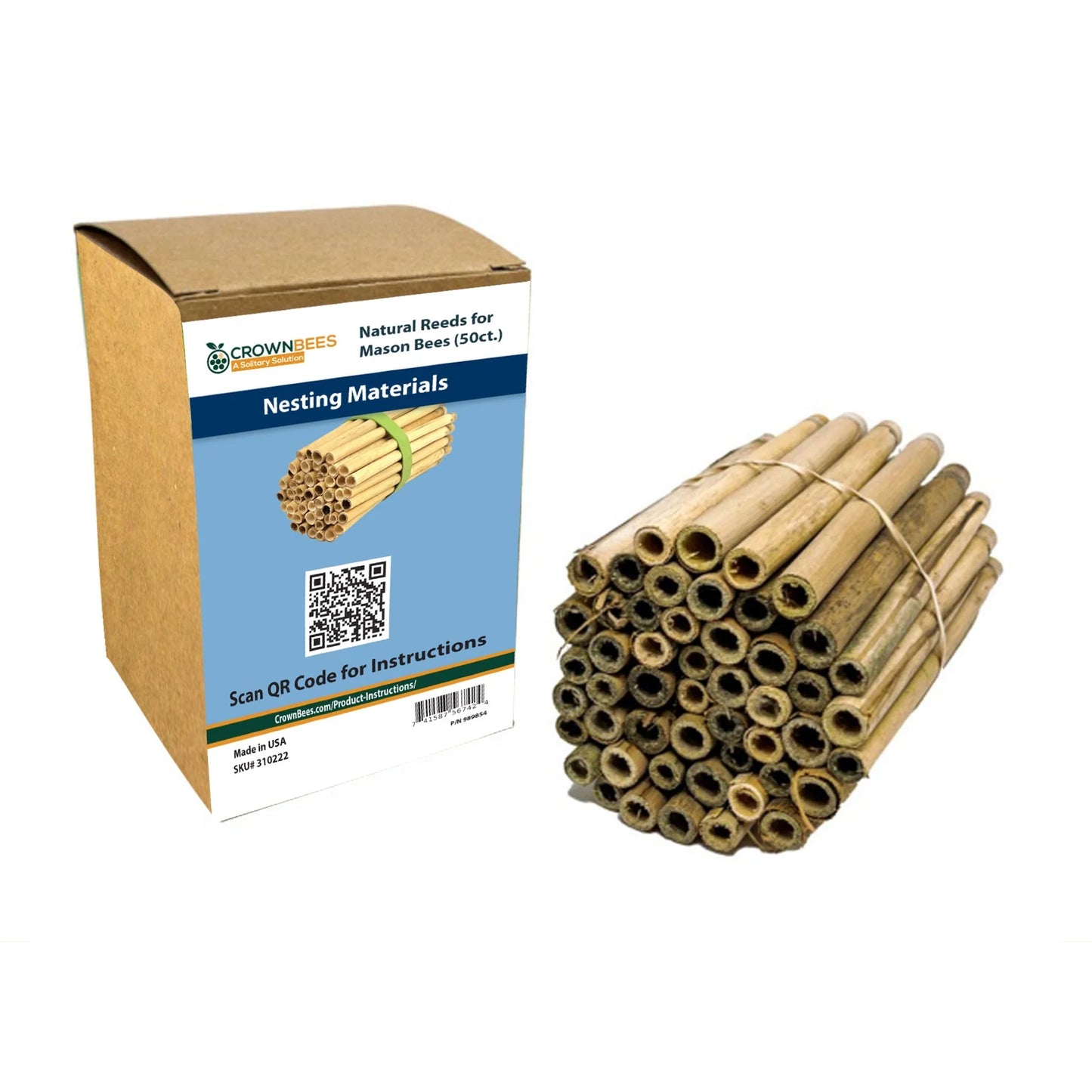
Natual Reeds:

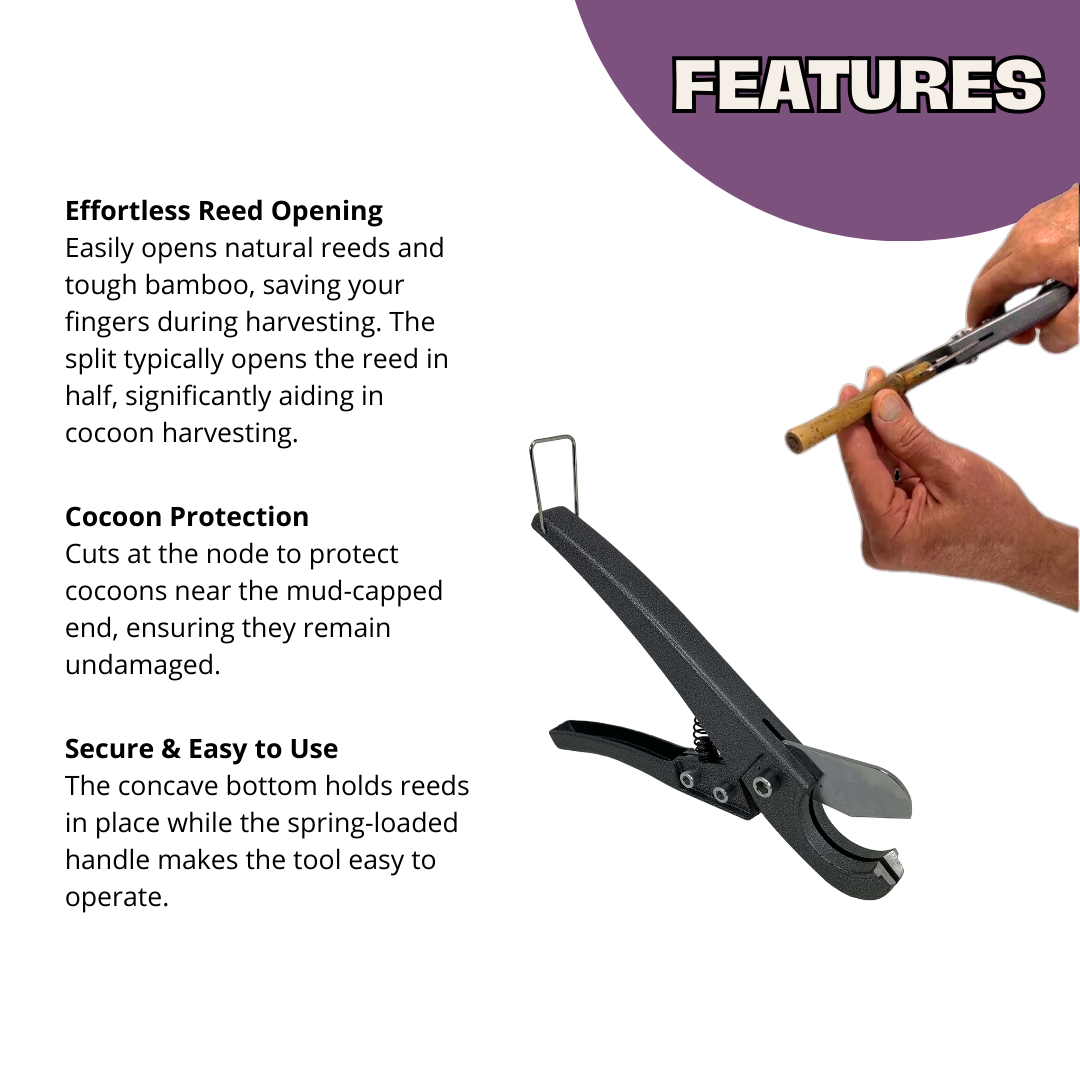
  1. Hold the reed, mud end up on your counter.  With your other hand use a butter knife or simple kitchen knife to gently push into the top of the reed.  Picture a “T” with the reed the vertical part and the knife the horizontal.
  2. There typically isn’t a cocoon on the top part of the reed, so push the knife down a bit and then rotate the blade so the reed separates down the entire length.  That’s all there is to it.
  3. Pull the reed apart.
  4. Using a Popsicle stick, or some small rounded tool, scoop the cocoons out of either side of the reed.

Here’s a short video showing how simple it is to open reeds:


Wood trays:

  1. Undo the cinch strap and start opening the top tray.  Realize that the cocoons and debris will be on both the top and bottom of the tray.
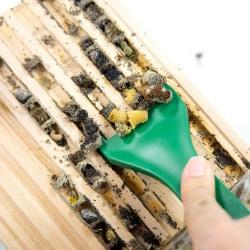
  2. Using a small flat screwdriver, or similar rounded tool, scrape down each channel to get both cocoons and debris out.  Remember that there are channels on both sides of each wood tray.
  3. For more detailed information, read our Product Overview of the wood trays.
  4. If you find chalkbrood, be careful how you handle this spore, as this is a serious issue.  Keep the chalkbrood spore away from all healthy cocoons.  You will wind up having to wash everything anyway, but extra caution can’t hurt!

Begin to observe!

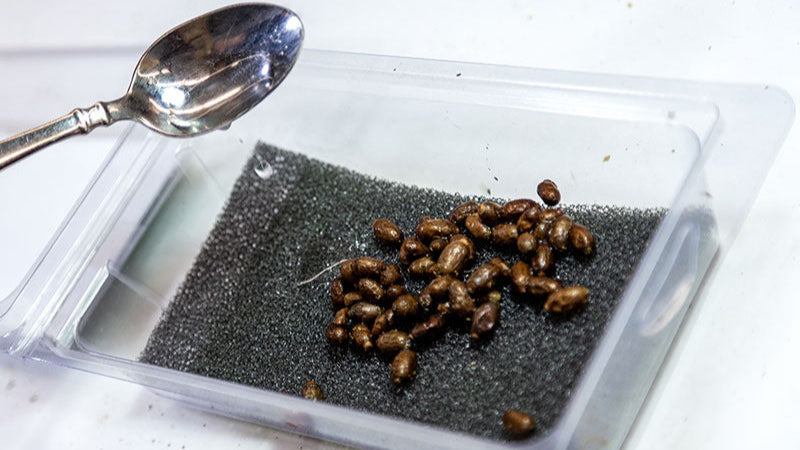
  • Separate the cocoons from everything else and place them gently in the box or bowl. You should find nothing that is harmful to touch.  (you might find an earwig or another pest…)
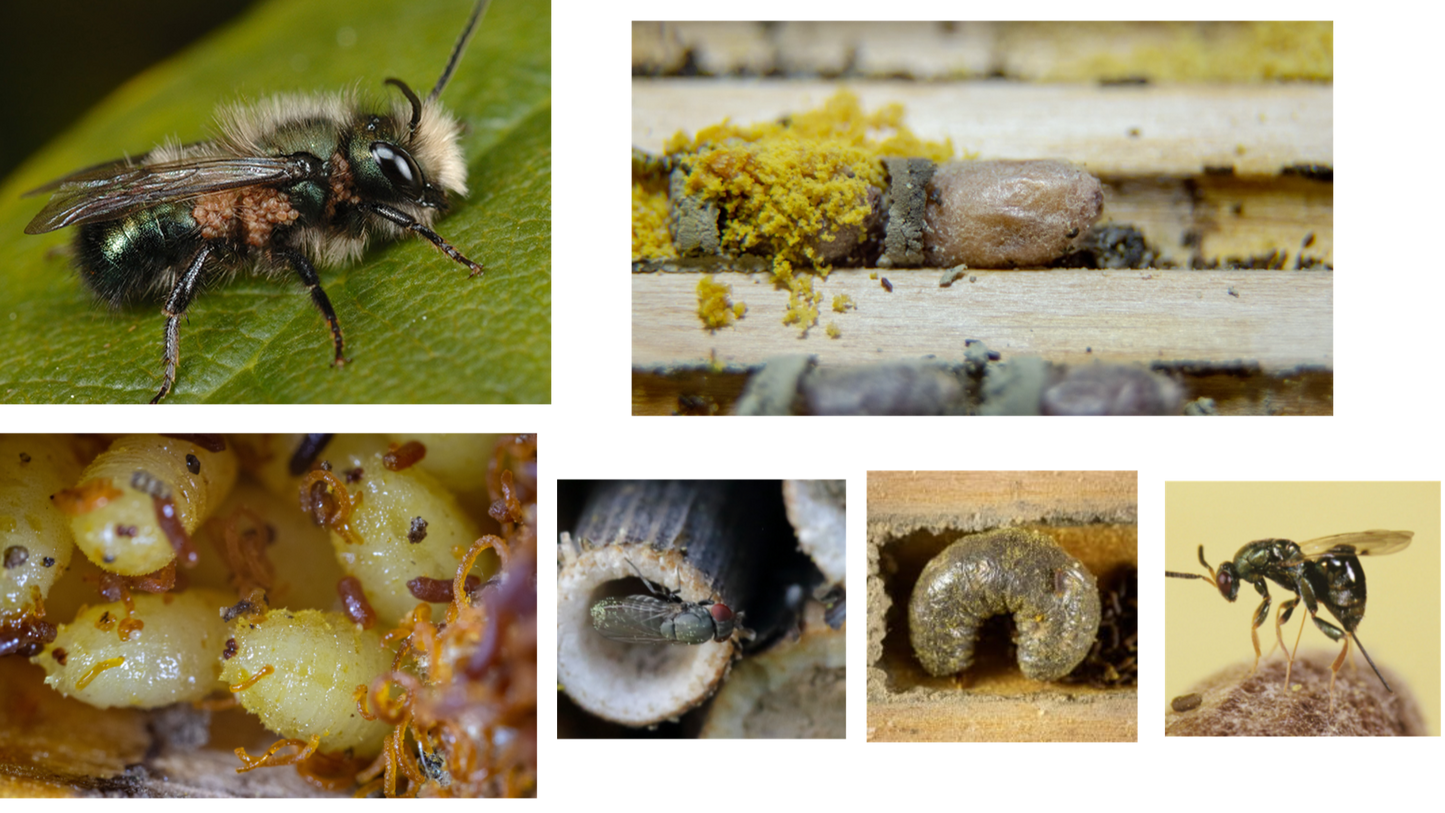
  • You should find two different types of mason bee cocoons:
     male and female mason bee cocoon

    1.  Defined cocoons (the majority)


    Defined Cocoons.  Male- left Female- right
    (Note the brown fecal matter from the larva)

     indistinct mason bee cocoon  2. Undefined cocoons

    Undefined ~ wispy silk

    There’s a bee in there, but it didn’t build what it should have…

  • Female cocoons are larger and typically toward the inside of the straw.
  • Everything else should be: mud, leftover pollen balls, feces, and perhaps pests.
 mud from mason bee tubes pollen from mason bee tube  Mason Bee feces from harvesting cocoons  mason bee cocoon that has exit hole
Mud Leftover Pollen Feces  Unusual (hole in cocoon)
  • Feces should be brown/black, straight, not curly.  If curly, this might be from the pest stelis whose cocoon is similar to the mason bee.

Throw all of this away, including the pests! (Save the cocoons!)

Other observations and thoughts:

Why is there leftover pollen?

  • Either the mason bee forgot to lay an egg into the pollen mass, or the larva died before it was able to eat any of it.
  • In some cases it might have been very rainy when the mason bee gathered pollen (the pollen mass might have been too “soupy”), the egg became buried and the larva drowned.

What can you do about this in the future?  Nothing!


There was a mud plug, but little or no cocoons behind it.  Why?

  • Toward the end of the mason bee’s life, they can get a form of dementia.  They know they were supposed to finish holes with mud, and do that until they die.  They will close empty tubes as well.

What can you do about this in the future? Besides start a “bee’s retirement home”, nothing!


If you found other nesting bees, what do you do?

  • You probably left your nesting material out during the summer.  There are over 130 different solitary bee species that look for available holes to use.  They also don’t recognize that a different bee has already used a portion of the hole.
  • Keep these different cocoons and full tubes separate from your spring mason bee cocoons and store them in an unheated space.  Place them out in the early summer to emerge and nest again.
What can you do about this in the future?   Take your spring nesting material down in early June, or when your spring bees have stopped nesting.  Place out other variable sized holes for these summer bees and let us know what you have nesting in them please.  Pictures would be great!  (send them to info@crownbees.com)


If you found cocoons that look to be shredded
  • If on the back end of the nesting hole, these are probably the remains of cocoons from previous seasons.
  • They also could be the action of pests like the carpet beetle
  • Be careful before throwing this away…  you might find new cocoons inside old cocoons.  Read more on this from our blog .

What can you do about this in the future?   Take your tubes down when the mason bees are inactive.  This prevents other species from nesting on top.  Harvest all of tubes.

Pest observations

This is the tricky part of harvesting, and the primary reason you’re harvesting.

“What’s going on in your nesting material that is harming your mason bees?”

A couple of points on pest observation. 

  • A few pests are fine (unless you find chalkbrood)
  • A lot of pests should have you concerned.
  • An old mason bee tube from a few seasons ago may have opened cocoons deep inside with new cocoons from this past season on the outside.
  • For a complete breakdown of pests, review our section on pests.
  • If there is a pest in the straw, you should be able to poke around and see what it is.  Typical pests might be a carpet beetle larva (photo on right) or mono.
Trogoderma in mason bee cocoon

What can you do about this in the future? In general, nesting material left outdoors and unprotected past June are susceptible to pests. We’d like to help remind you to bring them inside next year! Sign up for Bee Mail.

I find “orange sawdust” between some of the mud partitions. What’s that? pollen mites in mason bee tube
This is pollen mites and its feces. The pollen mite is clear, and the orange coloring is feces.

  • You probably live in a moist environment where pollen mites thrive.You can’t prevent the mites from hitchhiking on your mason bee with the pollen, but you can remove them from creating even more pollen mites in the spring. Read about solutions in pests.
 adult mites on a mason bee
  • In the spring, mason bees will need to crawl through these infected cells.  Mites attach themselves to the mason bee, which can prevent them from flying.  Mites drop off into the fresh pollen and breed even more pollen mites!

What can you do about this right now?

  1. Consider the amount of pollen-mite-filled “pockets” that you’ve found so far and the number of unopened tubes in front of you.  You will lose a few mason bees in the spring if you don’t open all mite-filled tubes, leaving the bees to crawl through the mites.  You will also get a buildup of mites as they will be spread out through the tube.  Next season’s mason bee using that tube now has additional mites infesting other egg chambers.  Chances are that future hole will have no surviving larvae. 
  2. It depends on how much effort you want to make to save the mason bees. If you have only a few mites, then consider leaving some tubes unopened.
  3. There are means to rid your nesting material from pollen mites through a heated incubation program.  Crown Bees feels that this is over-the-top and not worth the effort.  Pollen mites are just part of nature and are best handled during harvest.

Let’s now look at the suspicious straws

  1. Open them up as described above.  This is a video showing the opening of a thin walled straw tube with monodontomerus signs.  We found a surprise beneficial insect midway through the investigation!
  2. Look at damaged cocoons from where the holes started. Track down the pest and compare it to pictures in the Questions, On Pests section. You may not have found a pest, which is fine.  They may have finished, exited, and found a new straw.
  3. Move on through the remaining suspicious straws!
  4. If you come across chalkbroodmono, or carpet beetle larvae, you may want to consider opening up all of the straws.
  5. If your cocoons seem to match your other mason bee cocoons and there are no holes in them, you have successfully rescued these mason bees!  Well done!


Cleaning cocoons – do or don’t

  • Some on-line resources tell you to wash cocoons in water or clean them with sand. Crown Bees finds that a simple sorting with your hands to separate out the debris is adequate, and less messy!.  You could use a colander to sift out some of the debris.
  • Having a few mites around your mound of cocoons is not damaging.  It’s the concentration of mites in the straw that prevents the mason bees from flying in spring.  In their normal day of pollen gathering, they’ll pick up pollen mites naturally.  It is part of nature at work!  If you have a heavy concentration of  pollen mites, Crown Bees, after detailed analysis, believes that mason bees with mites loaded on their backs may actually increase your mites in the yard, compounding the situation.
  • If you found chalkbrood, we advise you to wash all cocoons as the chalkbrood spores may be on the walls of straws or cocoons.  AND open all of your nesting material.  This is a nasty spore that needs to be tackled before spring.

If you do want to wash cocoons:

  • Mason Bee cocoons are fairly waterproof and can take quite a soaking.
    • Prepare one large bowl with about a gallon of cold water.  Add about a cup of 6% concentration bleach solution.  Prepare a second bowl of  cold water without bleach for rinsing.
    • Drop the cocoons into the bleach bowl and stir the cocoons around for around a minute or 3.  Using a strainer or sieve, move the soaked cocoons to the rinse water and stir them again for about a minute.
    • Finally, remove the cocoons from the rinse and place them on towels to dry.
    • It’s that easy… if you need to do it.
    • Before you place your cocoons in hibernation, ensure that the cocoons have dried adequately.  They should not be wet to the touch.
    • If you can, dry the cocoons outside where it’s cooler and not inside your house where some mason bees might think it’s spring due to the warmth!


Storing your cocoons for their hibernation

Your adult bees in the cocoons need to hibernate until spring. Consider a fat bear and skinny bear going into their cave for hibernation. As their metabolism slows, they are surviving on their stored fats to make it through the winter. Which will survive a long winter best?

Your mason bees are no different. An insect’s metabolism slows down when they are cooler and they absorb less fat. If they are adult bees now, they have begun to absorb their fat. Placing them into a refrigerated environment sooner has them surviving better.

A recent 2010 science study completed by the ARS/Bee Lab confirms that blue orchard bees kept at a constant 40°F (4° C) temperature vs. a sporadic winter temperature have better survival rates and have more energy when they emerge in the spring.  Mason bees survive outside fine.  However, there will be a larger portion that may not survive due to the fluctuating temperatures.

Refrigerator option:

  • In early October, place your cocoons and unopened tubes in a refrigerator with temperatures around 38-40°F degrees.  Humidity is needed at about 50-70%. mason bee humidity chamber for tubes and cocoons A small bit of oxygen is also important.  (Don’t close the lid on a Tupperware container without adding holes.)
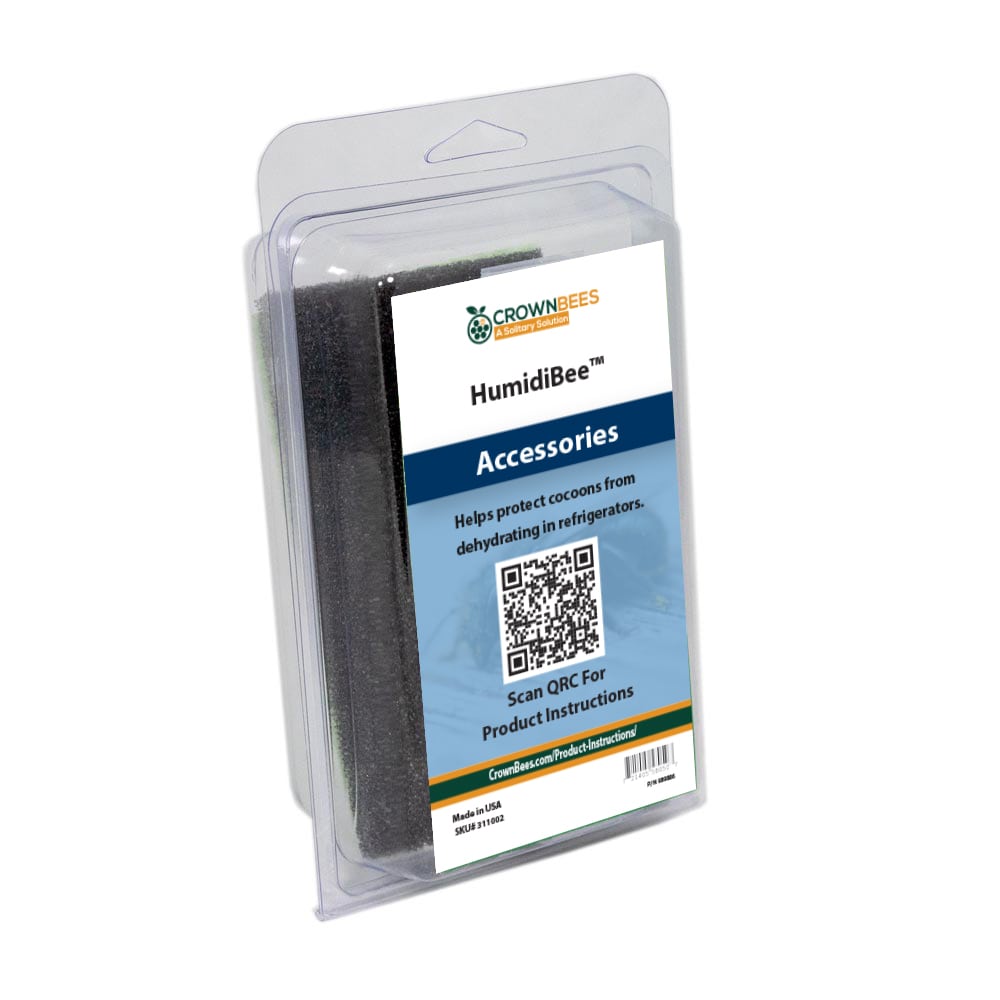
    • Modern frost-free refrigerators are very dry inside. Most have a moisture content of about 20-30% which is fine for a few weeks, but will dehydrate your cocoons unless kept in your crisper drawer (where there are moist things) or in a mason bee humidity chamber that keeps the humidity around 60-75% which Crown Bees has for sale ($5).
  • If stored in a garage refrigerator with fruits that ripen (what fruits/vegetables?), consider that ethylene gas is created which can kill mason bees. Open the refrigerator door occasionally.
  • This option allows you to determine when you want your cocoons released in the spring.
  • Monthly, it couldn’t hurt to check the cocoon’s condition.  Is there adequate water?  Do you have mold growing on the surface of the cocoons?  If so, this mold has transferred from another source within your refrigerator.  It really can’t harm your hibernating bees if it’s just a mild case.  Wash the cocoons with 1 tablespoon of bleach to about a cup of cold water for 30 seconds to a minute.  Rinse the cocoons in cold water and dry them off with a paper towel before placing them back within the humidity chamber.

Natural outside option:mason bee tubes stored in a container

  • Store your cocoons and unopened tubes in an unheated garage or shed where rodents can’t eat them. Plastic tubs will suffice. Ensure that there are a few small holes for air to enter.
  • A problem with this option is that when you have a brief warm period, your bees may begin to emerge prematurely.

A little of both?

  • Keep your mason bees outside until early Spring.  At this point, place them in your refrigerator.
  • This allows you to determine when to release your cocoons vs. relying on a sporadic spring.  A hibernating bee can survive 6-7 months.  Thus, you should be able to hibernate your mason bees through April.  If you keep the cocoons in hibernation into May, you will see less survival.